The Yes / No / Maybe List: A Checklist for Couples

Short answer: a yes/no/maybe list is a private worksheet that each partner fills in separately, then compares, so you can see what you both want without anyone having to ask first. This guide gives you a plain-language BDSM checklist to copy, plus a method for using it without awkwardness.
By KBD Editorial. Reviewed by the KBD team for accuracy, November 2026.
Key points
- Fill the list in alone. Compare it later, together, with no pressure to decide tonight.
- Share only the overlaps first: the items you both marked yes.
- "Maybe" means "ask me, don't assume." It is tomorrow's conversation, not tonight's plan.
- A no never needs a reason, and nobody argues with it.
- Lists change. Revisit yours every few months.
What is a yes/no/maybe list?
A yes/no/maybe list is a worksheet of activities, tools and situations where each person marks yes, no or maybe, privately, before any shared conversation. It turns a hard question ("what do you want?") into a short, concrete one ("how do you feel about this item?").
The format works because it separates thinking from performing. Many people do not know what they want until they see it written down, and many find it easier to tick a box than to say a sentence aloud. It also protects the conversation from the most common failure: one person suggesting something and the other agreeing out of politeness. When both of you have already answered in private, a yes is a real yes.
It is a tool for building consent, not a contract. A tick in the yes column is permission to talk about the item, not permission to do it on a particular night. Consent can be withdrawn at any time, for any reason, and NCSF, a US advocacy nonprofit, publishes consent resources through its Consent Counts program.
How do you use it without awkwardness?
Fill it out apart, share the overlaps first and keep the tone curious. The goal is to learn, not to negotiate, and nothing on the list has to happen.
- Each person fills in a copy alone. Use pencil or a private note. Take as long as you need.
- Choose a calm time to compare. Not in bed, not after an argument and not when either of you is tired. A walk or a meal works well.
- Start with the shared yeses. Naming what you both want sets a warm tone before anything more delicate.
- Then the maybes. Ask each other what would make a maybe feel like a yes: more information, a slower pace, a different setting.
- Leave the nos alone. If one of you marked no, that is the whole conversation about that item.
If speaking about it feels hard, our partner conversation guide has opening lines you can borrow.
What goes on the list?
The list covers restraint, blindfolds, roles, impact, words, timing and aftercare, and it describes each in plain terms. Here is a starting version you can copy into a document and add to. Mark each row Yes, No or Maybe.
| Category | Item | Me: Y / N / M | Partner: Y / N / M |
|---|---|---|---|
| Restraint | Soft wrist cuffs | ||
| Restraint | Ankle cuffs | ||
| Restraint | A restraint jacket (cropped) | ||
| Restraint | A restraint jacket (full-length) | ||
| Restraint | Rope or tape | ||
| Restraint | Being restrained while seated | ||
| Restraint | Being restrained lying down | ||
| Senses | Blindfold | ||
| Senses | Feathers, soft textures | ||
| Senses | Temperature (warm or cool objects) | ||
| Impact | Light slapping with a hand | ||
| Impact | A paddle or soft whip | ||
| Roles | One partner leads | ||
| Roles | Switching who leads | ||
| Roles | Giving instructions | ||
| Roles | Following instructions | ||
| Words | Praise | ||
| Words | Firm, commanding tone | ||
| Words | Pet names | ||
| Words | Silence | ||
| Timing | A planned evening | ||
| Timing | Something spontaneous | ||
| Timing | Sessions under 20 minutes | ||
| Setting | Home only | ||
| Setting | Photos or video | ||
| Aftercare | Cuddling afterwards | ||
| Aftercare | Water, food and quiet | ||
| Aftercare | A check-in the next day |
Add your own rows. Nothing on the list is a standard, and a short list you both understand beats a long one you do not.
What do you do with the maybes?
Treat maybes as questions for later. They are not a gentle yes and they are not a no. They mean "I'm open to hearing more, and I want to set the pace."
Pick one maybe at a time. Ask what would help: seeing the item in person, trying it in a smaller form, doing it for five minutes instead of twenty, or having a clearer signal to stop. Then try the smallest version and talk afterwards. A maybe that becomes a yes after a gentle trial is worth more than a yes that was given to please someone.
Some maybes stay maybes forever, and that is a perfectly good outcome. The list is only useful if people feel free to leave things unticked.
How do the answers connect to a stop word?
A list tells you what you might do, and a stop word tells you what to do when something is wrong. You need both, and the second is more important. Before any scene begins, agree a word that ends everything immediately, plus a non-verbal signal for moments when speaking is hard. Our safewords guide explains how couples choose them and how to practise.
When you plan a first scene from the list, begin with items both of you marked yes, choose one or two, set a time limit and talk through how it will go. The guide to building a scene walks through the structure. If restraint is on your shared yes list, the new to play collection collects beginner-level pieces in one place.
How often should you update it?
Revisit your list every few months, or after anything that changes how you feel. People develop, and so do limits. An item you ticked yes to last spring might be a maybe now, and that is not a problem to solve, only something to know.
Questions
Do both partners have to answer the same list?
Yes, ideally the same version, so the rows match. Print or copy it twice and fill the copies separately.
What if my partner marks no to something I really want?
Respect it without debate. You can say what draws you to it at another time, but a no stays a no unless they change it themselves.
Can a yes/no/maybe list be used by people who are new to all of this?
It is built for exactly that. Start with the first section and a handful of rows, and let the list grow as your comfort does.
Is the list a record of what we have agreed to do?
No. It is a conversation starter. Every time you play, consent is renewed in the moment, and either person can change an answer or stop at any time.
Shop the piece
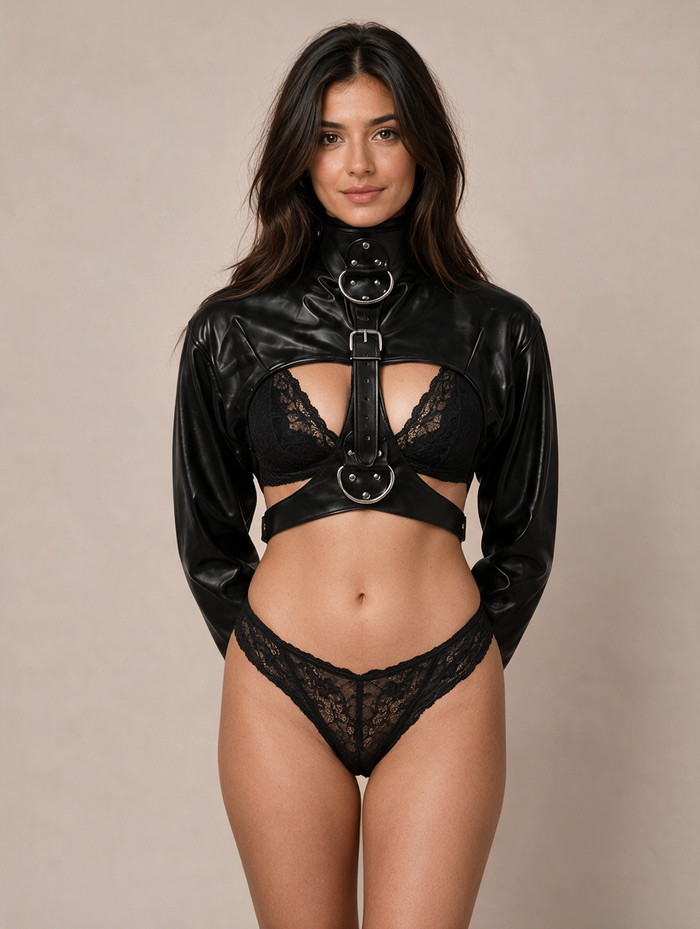 Half Jacket$84.98
Upper-body restraint in leathery PU that holds the arms behind the back. Sizes S and M.
Shop the Half Jacket →
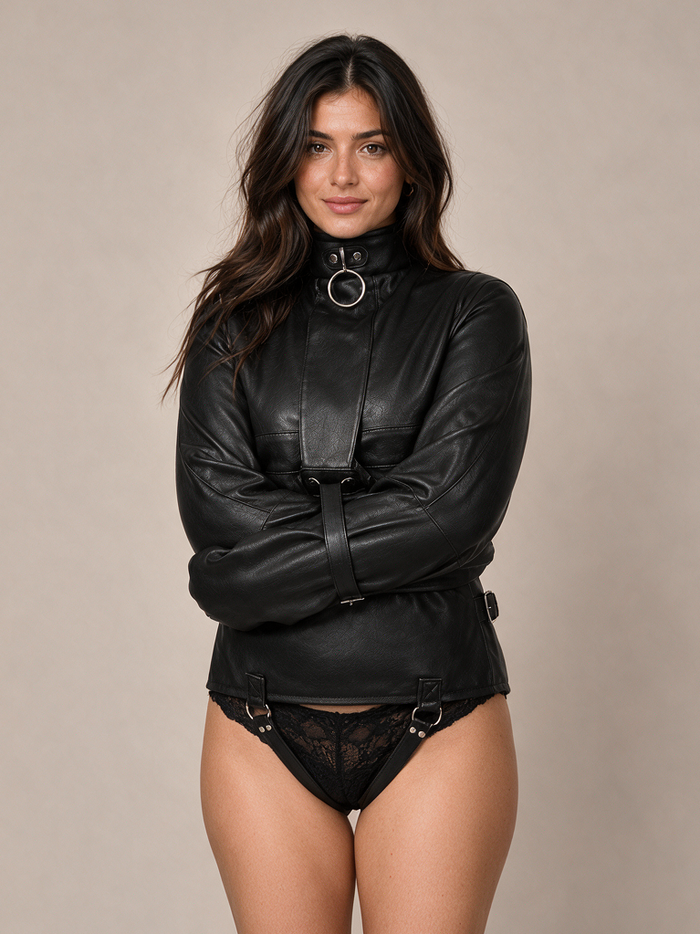 Bondage Jacket$89.25
Full-coverage restraint jacket in leathery PU: black, white, pink or red.
Shop the Bondage Jacket →
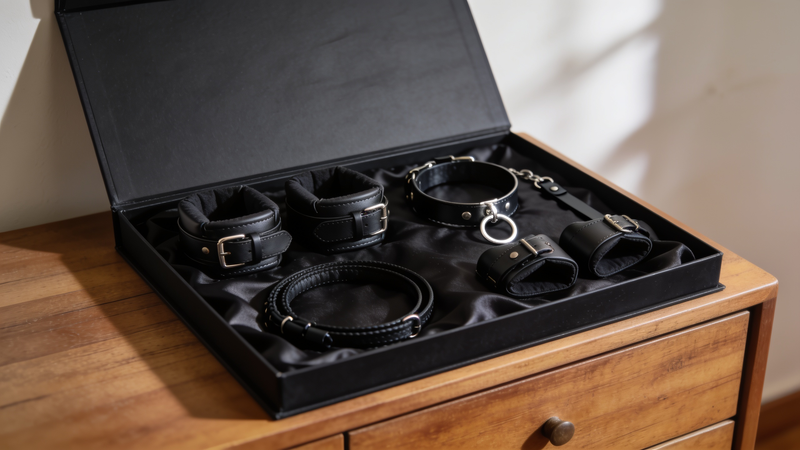
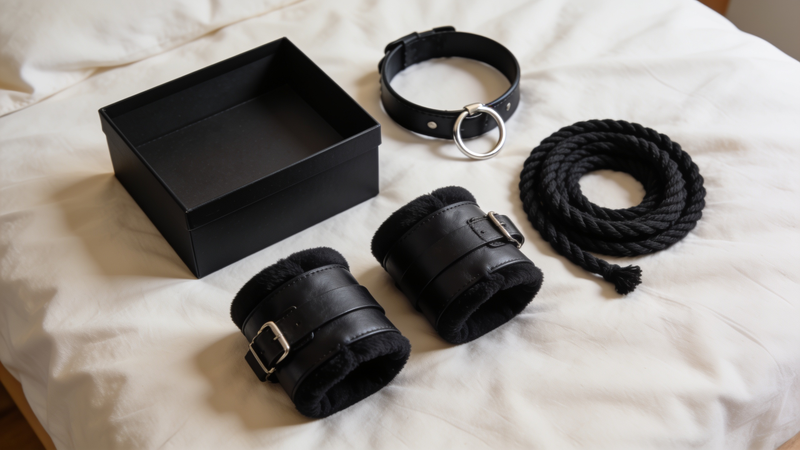
Starting with accessories? Try the Beginner's Bondage Kit (10 Piece) or browse all kits.